Insyt Care
Home care, perfectly synced
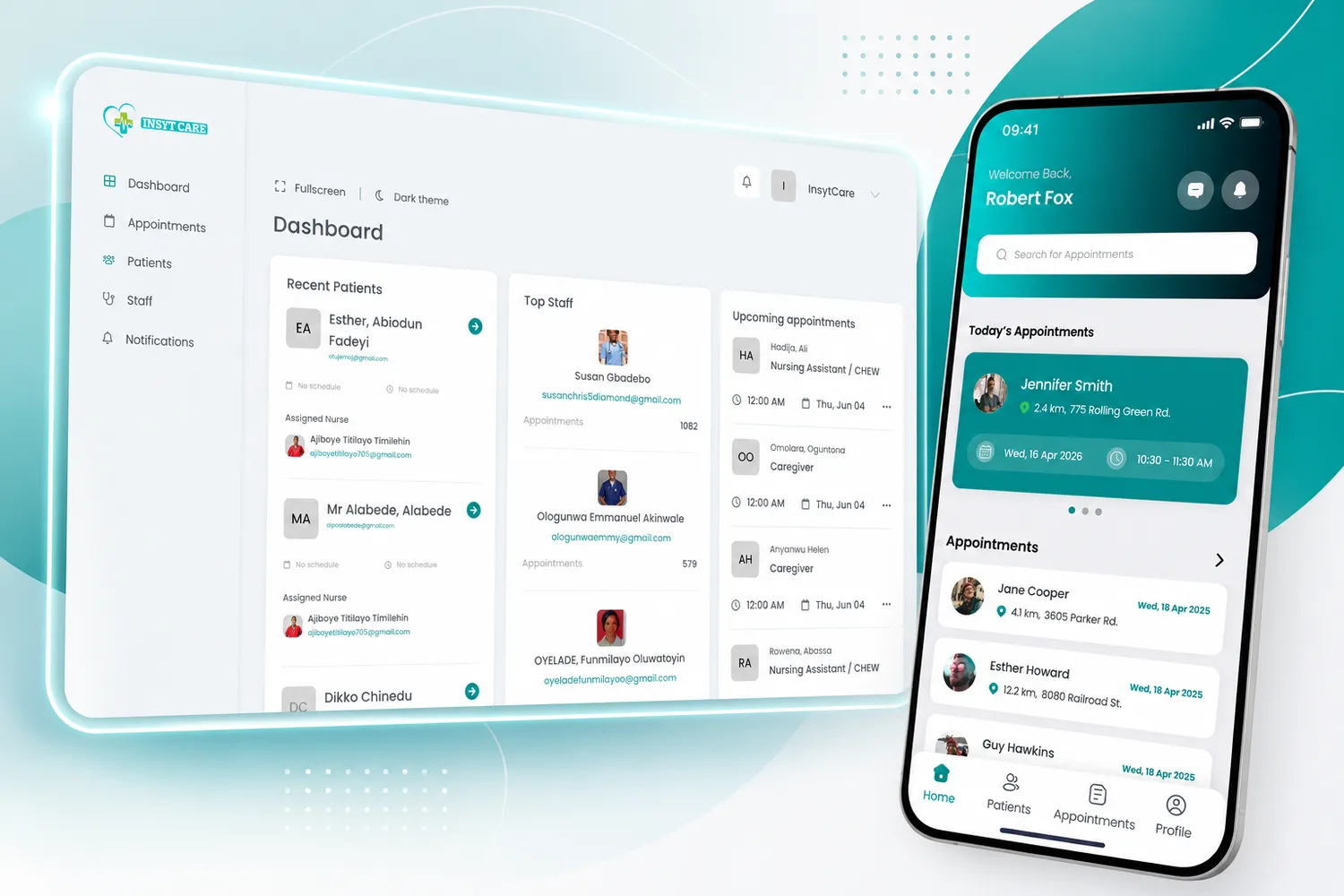
Insyt Care delivers nursing and caregiving into people's homes — but the coordination was held together by group chats and paperwork. We built them a single Firebase-backed system with two faces: a web dashboard for the office and nurses, and a mobile app for caregivers and patients, so a schedule, a vital sign or a message updates everywhere the instant it's entered.
- Client
- Insyt Care
- Industry
- HealthTech · Home Care
- Timeline
- 18 weeks · 2025
- Services
- Web dashboard, Companion mobile app, Firebase architecture
The outcome, in numbers
Before and after.
Care coordination
Roles on one backend
Vitals interpretation
The challenge
Where they started.
Home care is a logistics problem wearing a clinical coat. An admin team had to recruit and vet nurses and caregivers, match them to patients, schedule visits, collect IDs and licenses, and keep billing straight — while the people actually doing the work were out in patients' homes, not at a desk. The office lived in spreadsheets and a CMS; the field lived in WhatsApp. The two were never quite in agreement.
The audiences needed genuinely different tools. Admins and nurses need a dense, data-rich console — full schedules, every patient's history, document review, finances, broadcast messaging. Caregivers and patients need something simple in their pocket: today's visits, a care plan, a way to message and to log how the patient is doing. Building one interface for all four would have served none of them well.
And it had to be safe. Four roles with very different permissions, real clinical data, ID and license documents, and a vitals workflow where a wrong reading slipping through unnoticed isn't a bug — it's a patient-safety issue. Access control and data integrity couldn't be an afterthought bolted on at the UI.
Our approach
How we built it.
 01
01Two surfaces, one source of truth
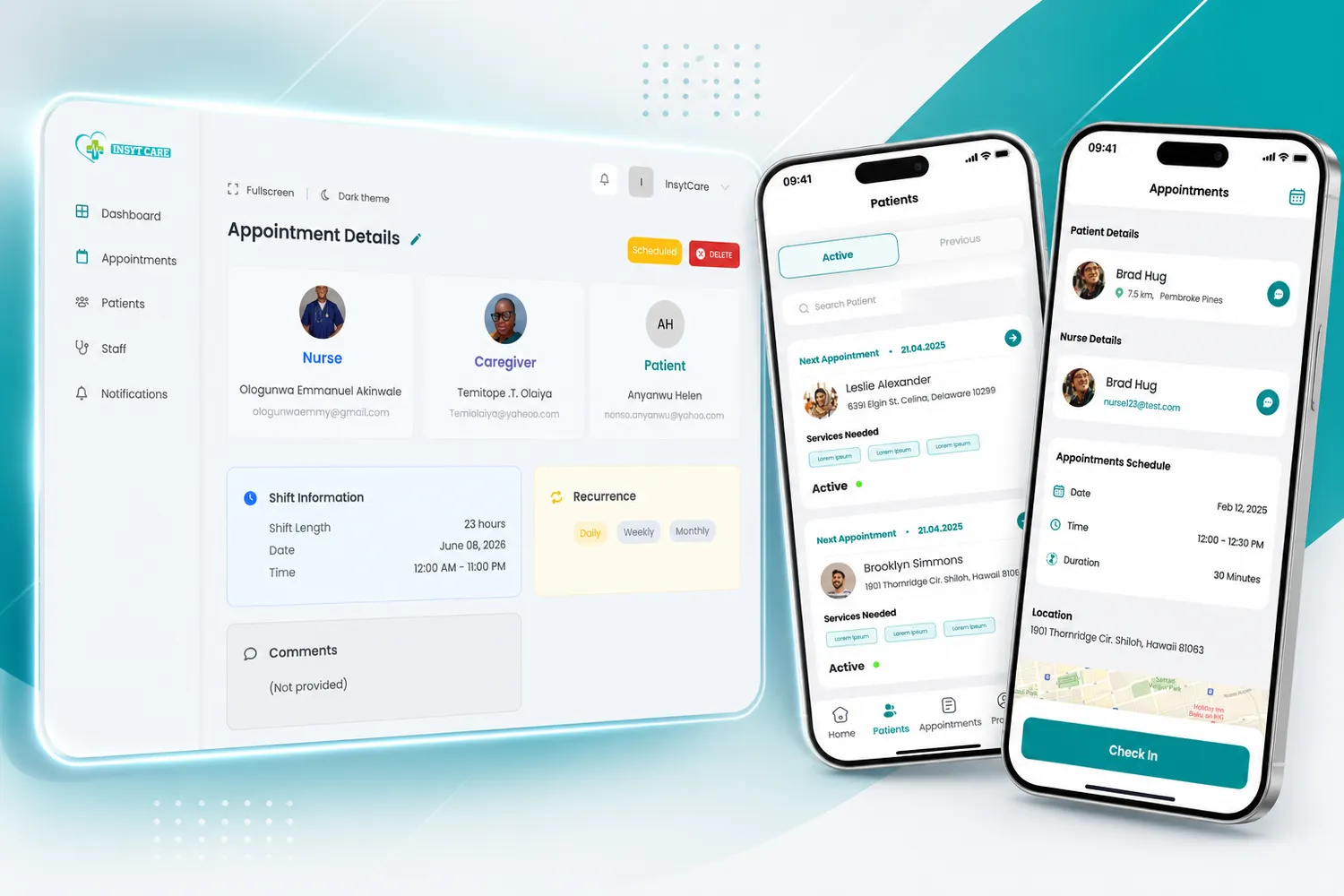
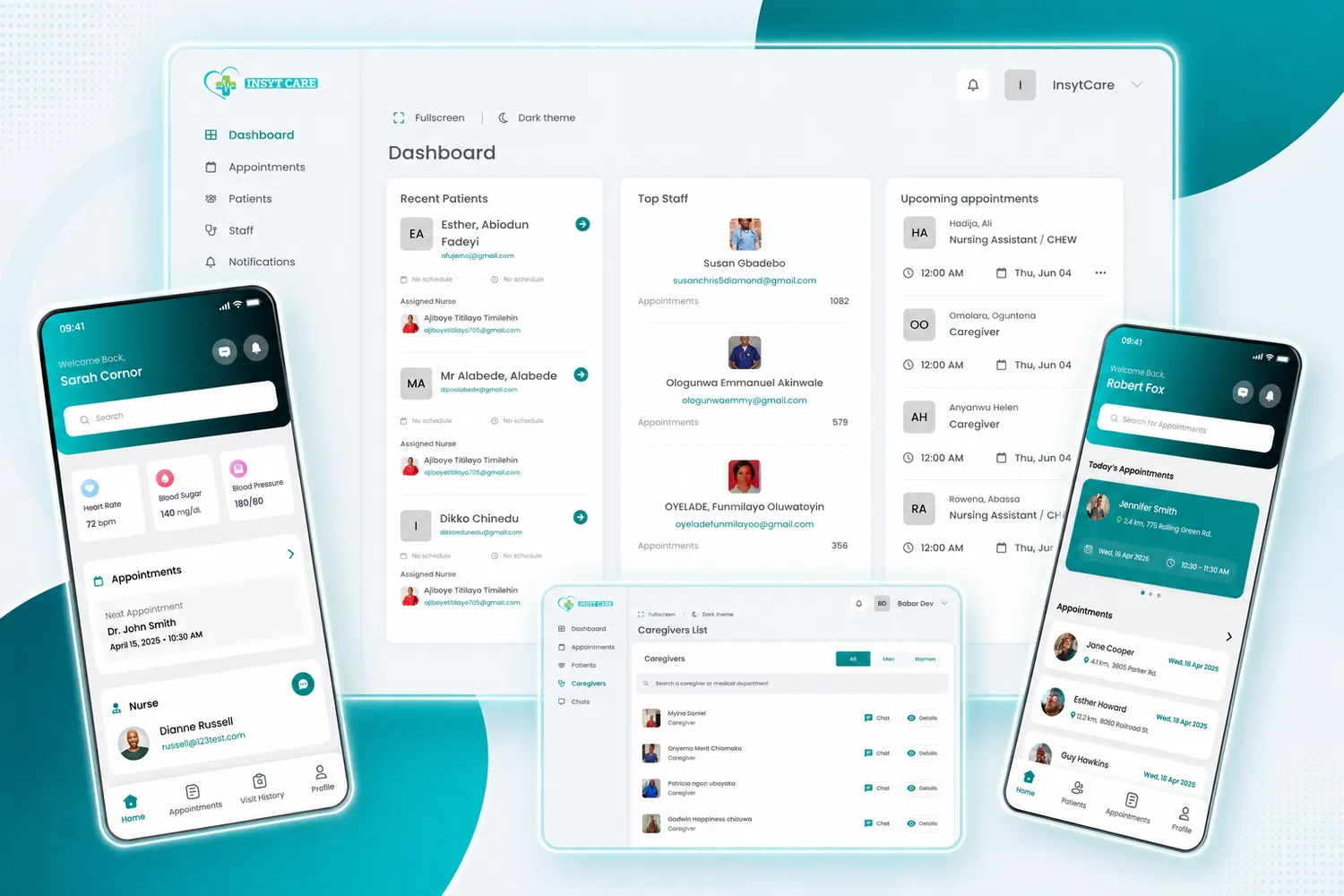
We built a React + MUI web dashboard for admins and nurses and a companion mobile app for caregivers and patients, both reading and writing the same Cloud Firestore. Because the data layer is shared and real-time, a visit a nurse schedules on the web appears on the caregiver's phone immediately, and a vital a caregiver logs in the field shows up in the office without anyone refreshing or re-keying it.
 02
02Four roles, enforced at the backend
Admin, nurse, caregiver and patient each see a different app. Privileged actions — creating staff accounts, promoting an admin, deleting a user and cleaning up their appointments — run through Firebase Cloud Functions with custom claims, not client-side checks, so permissions are decided on the server. The axios layer auto-refreshes Firebase ID tokens and bounces expired sessions to login, keeping every request authenticated.
 03
03The clinical workflow, end to end
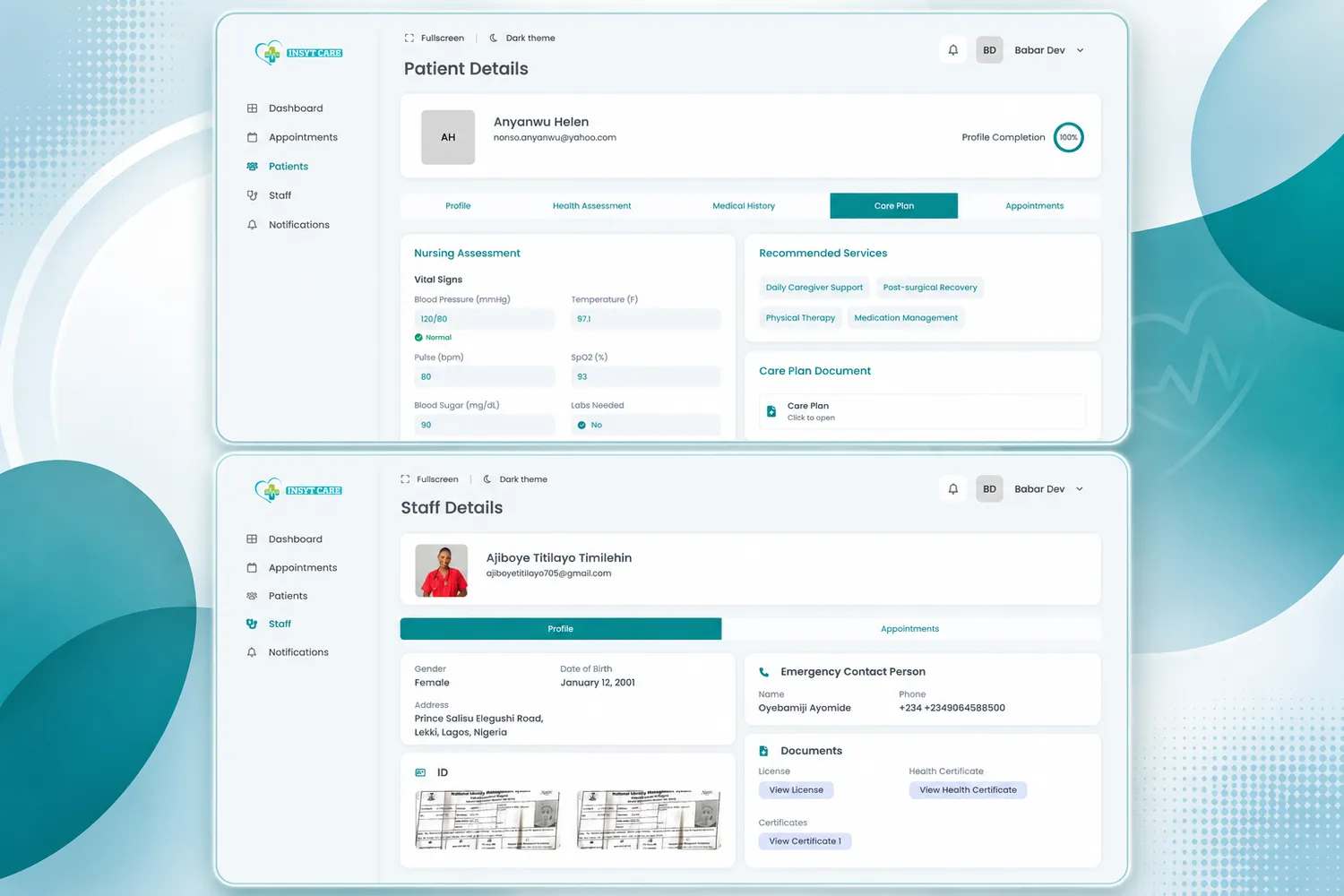
A guided multi-step wizard onboards patients and caregivers, uploading care plans, profiles, IDs and licenses into a structured Cloud Storage document vault instead of a filing cabinet. Nurses assign shifts on a calendar, mark visits complete, and track vitals — where blood-pressure readings are automatically staged against AHA/ACC guidelines (normal through hypertensive crisis) the moment they're entered, so a dangerous reading is flagged, not buried in a number.
 04
04Real-time chat and targeted notifications
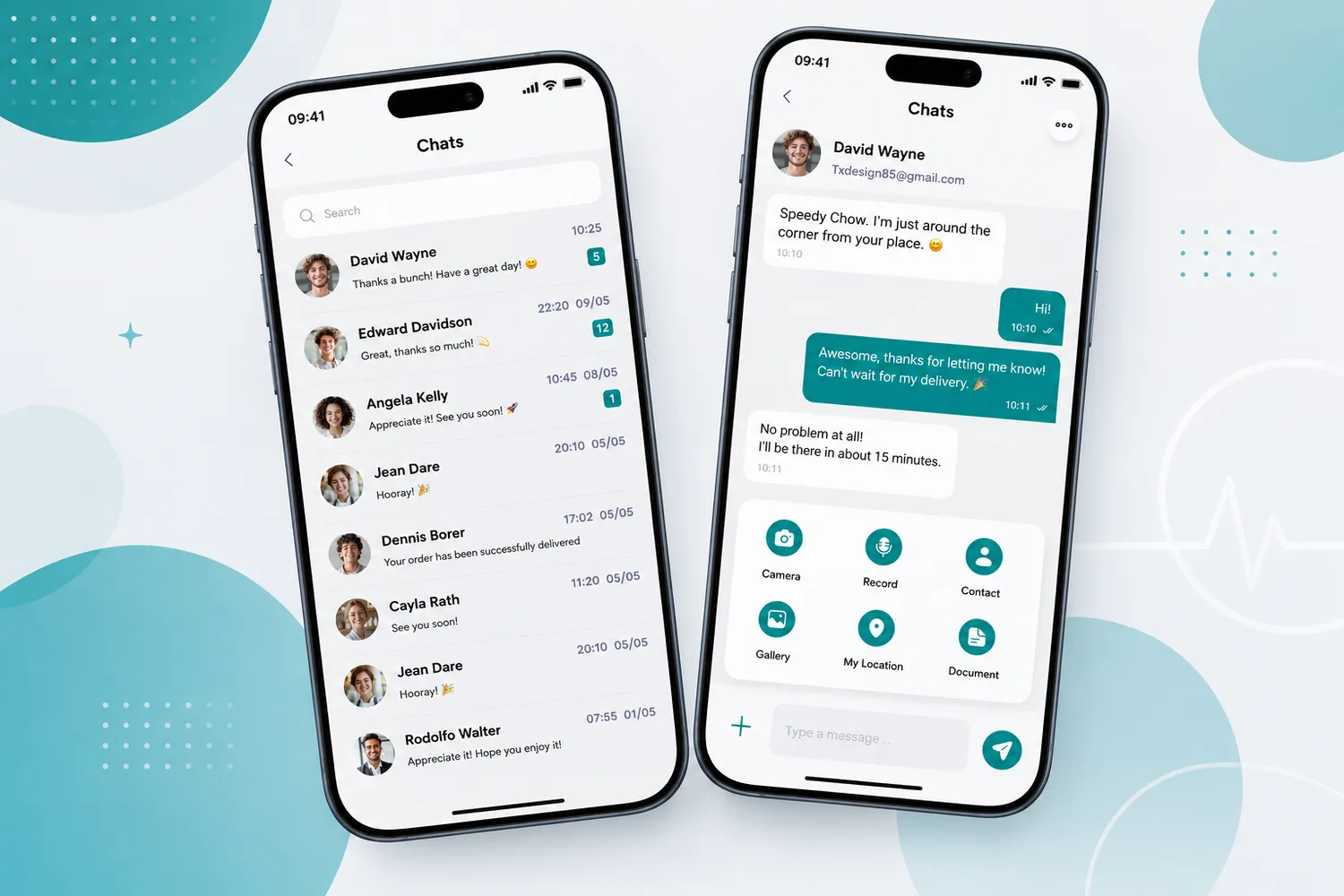
Staff and patients message each other over Firestore listeners, so conversations and unread counts stay live. Notifications are targeted intelligently — broadcast to everyone, scoped to a role (all nurses, all caregivers), or aimed at specific user IDs — and delivered as Firebase Cloud Messaging push to both web and mobile, with a service worker handling background delivery so an alert reaches a caregiver even when the app is closed.
Stack we shipped
The result
What changed.
The provider went from stitching care together across WhatsApp, calls and paper to running it from one platform — the office and nurses on a rich web console, caregivers and patients on a focused mobile app, every schedule, document, vital and message shared in real time across both.
Coordination that used to depend on someone relaying information now happens in the system: a visit scheduled on the web is on the caregiver's phone instantly, a vital logged at the bedside is in front of the nurse immediately, and AHA/ACC-staged blood-pressure readings surface risk at the point of entry instead of on a later review.
With four roles enforced server-side through Cloud Functions and custom claims, clinical data, documents and billing sit behind real access control rather than UI guesswork — a foundation the team can grow on without re-litigating who's allowed to do what.
Demo video
See it in action.
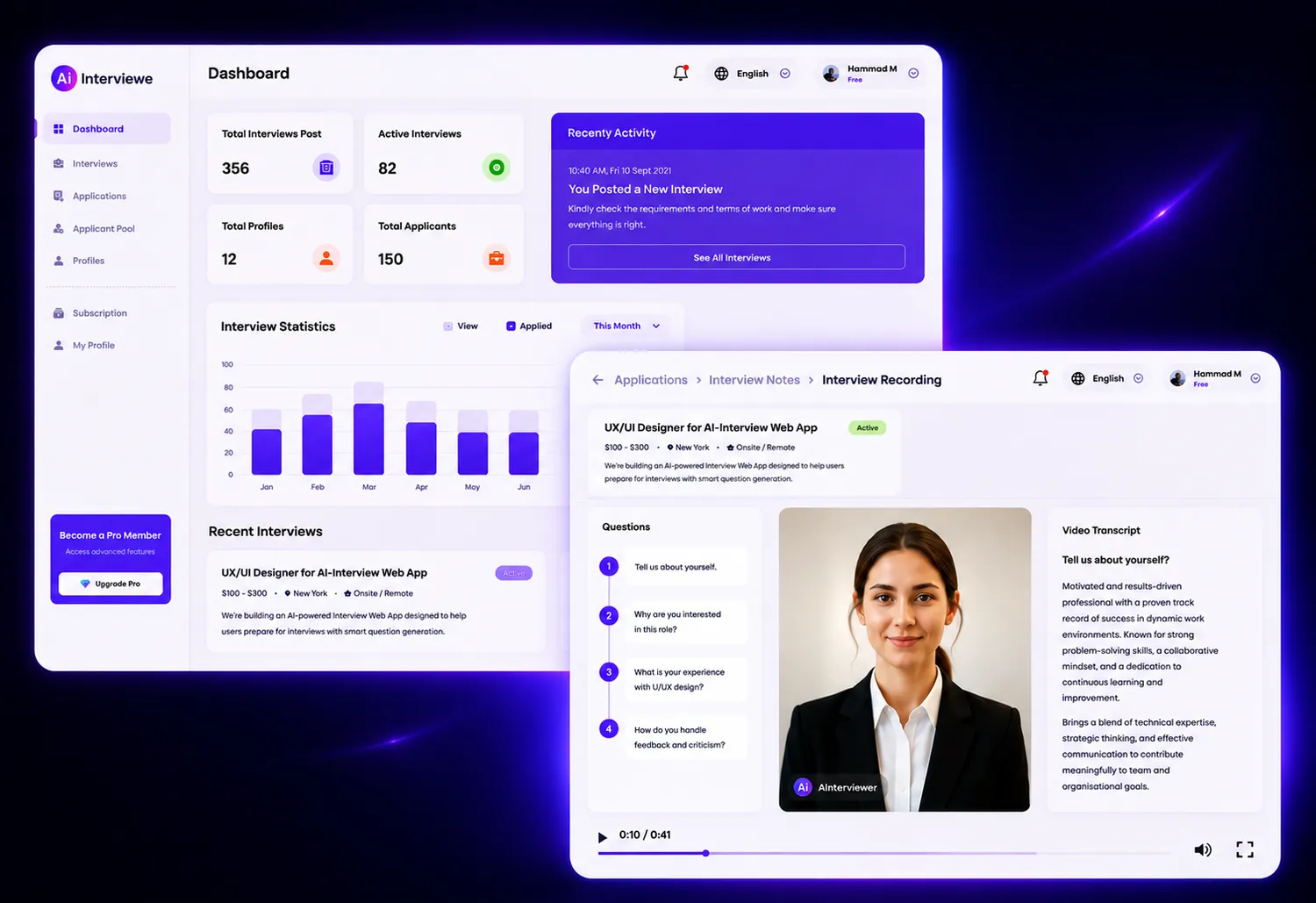
Insyt Care in action — web dashboard and companion mobile app sharing one real-time Firebase backend across all four roles.
Have a project like this?
Tell us what you want to build. We'll tell you how fast we can ship it — and walk you through this build live.