HireAI
Screen every applicant, instantly
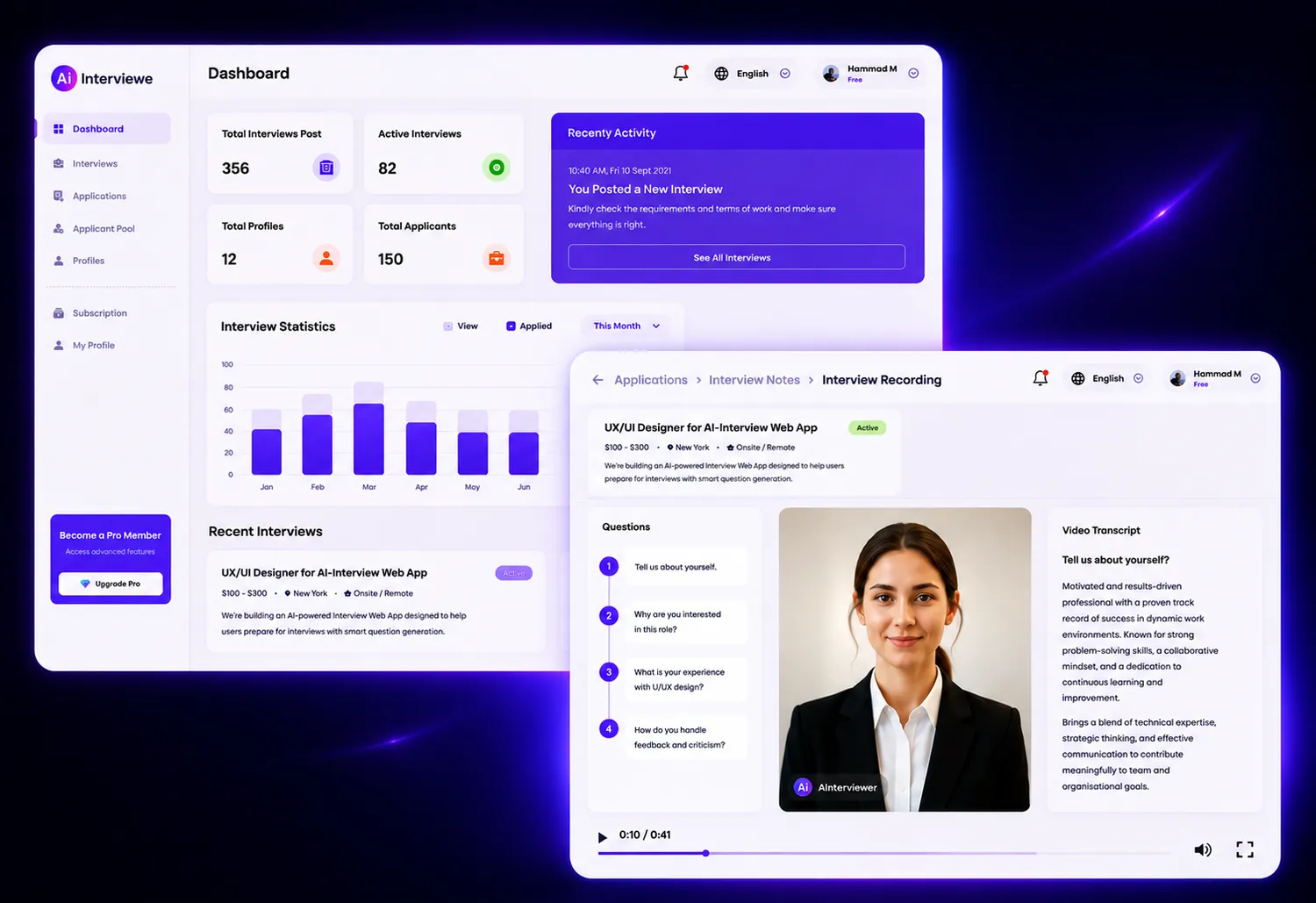
TalentBridge could only first-round a sliver of the applicants it attracted. We built them an AI interviewer — a real-time talking avatar that interviews every candidate on demand, scores each answer against a fixed rubric, and proctors for integrity — turning a five-day screening bottleneck into an eight-minute conversation.
- Client
- HireAI
- Industry
- AI · HR-Tech
- Timeline
- 16 weeks · 2025
- Services
- AI engineering, Real-time voice + avatar, Full-stack SaaS
The outcome, in numbers
Before and after.
Time to first-round screen
Recruiter hours / 100 applicants
First-round capacity
The challenge
Where they started.
TalentBridge's funnel worked too well. Thousands of applications arrived for every role, but a small recruiting team could only first-round about 30 candidates a week — so strong people sat in a queue for days while recruiters burned roughly 40 hours screening every 100 applicants. Worse, each interviewer ran the conversation differently and scored on instinct, so the same candidate could pass with one recruiter and fail with another.
They didn't want another one-way 'record your answer' tool — those feel like a test, not an interview, and tell you nothing about how someone actually converses. The bar was a real back-and-forth that any candidate could take the moment they applied, in their own language, that produced a consistent, defensible score a hiring manager could trust — and that couldn't be quietly gamed with notes or a stand-in off-camera.
Our approach
How we built it.
 01
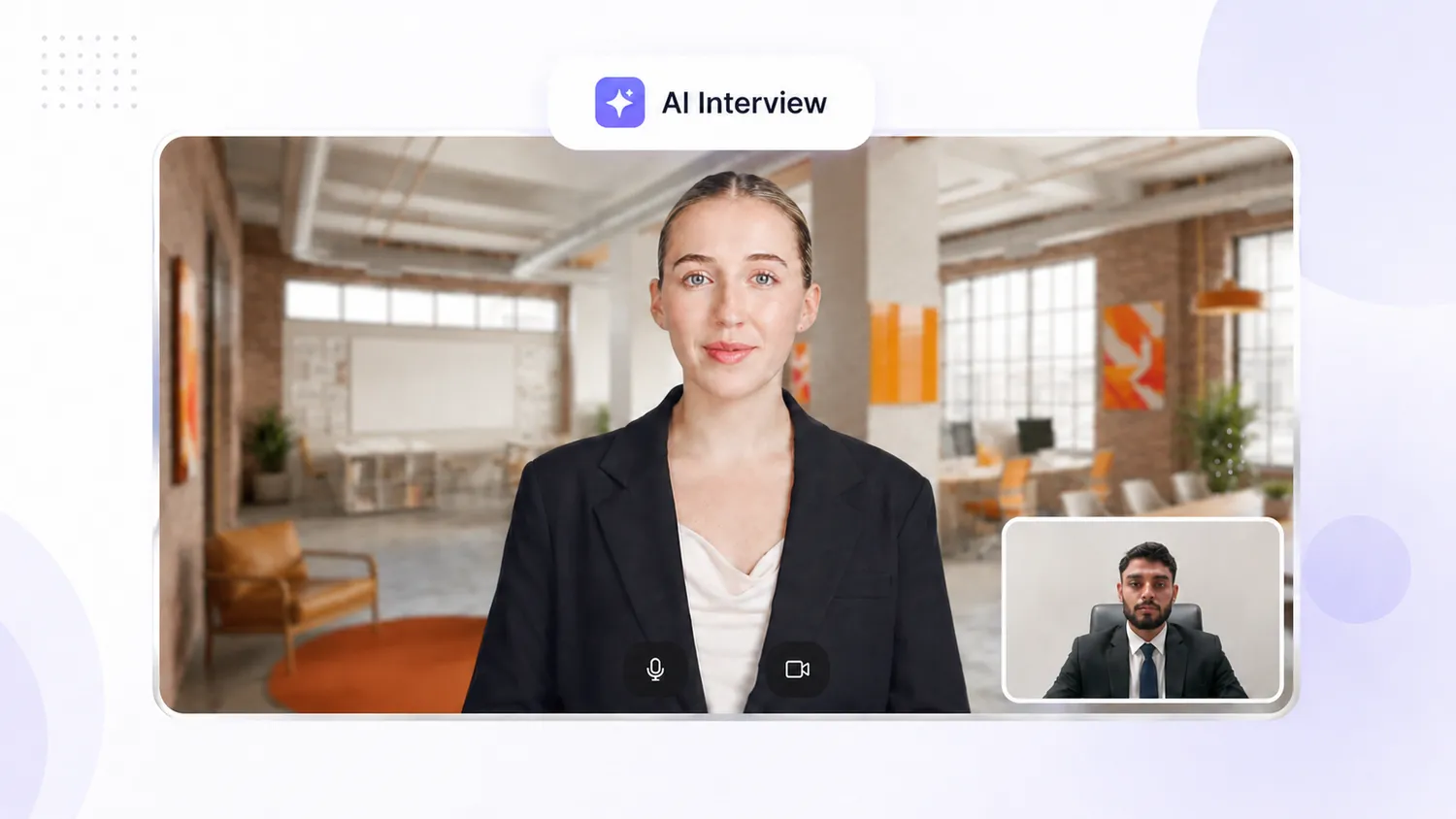
01A real-time avatar that actually converses
We built a talking-avatar interviewer on a real-time voice pipeline so it listens, speaks, and turn-takes with sub-second latency. Server-side voice-activity detection hands the floor back and forth naturally, and the candidate's webcam records alongside a live transcript — a genuine conversation, not a one-way recording booth.
 02
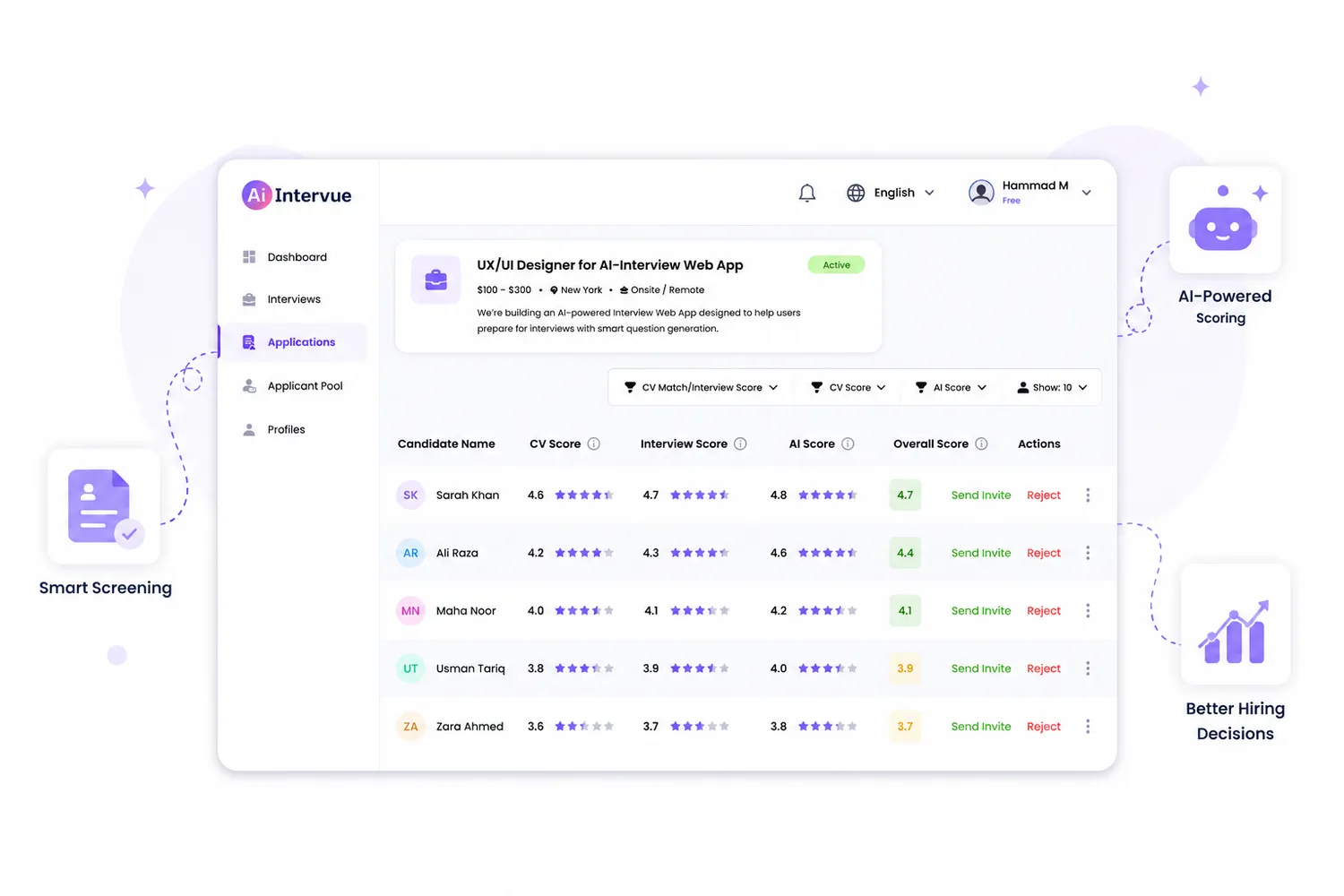
02Rubric-locked scoring, not gut feel
A NestJS service drives the interview through a large language model, scoring every answer 0–20 in real time, then grades the full transcript on a fixed rubric — communication, problem-solving, motivation, and confidence — into a weighted 0–100 score. A second pass on the video adds professionalism and energy reads, so every candidate is measured the exact same way.
 03
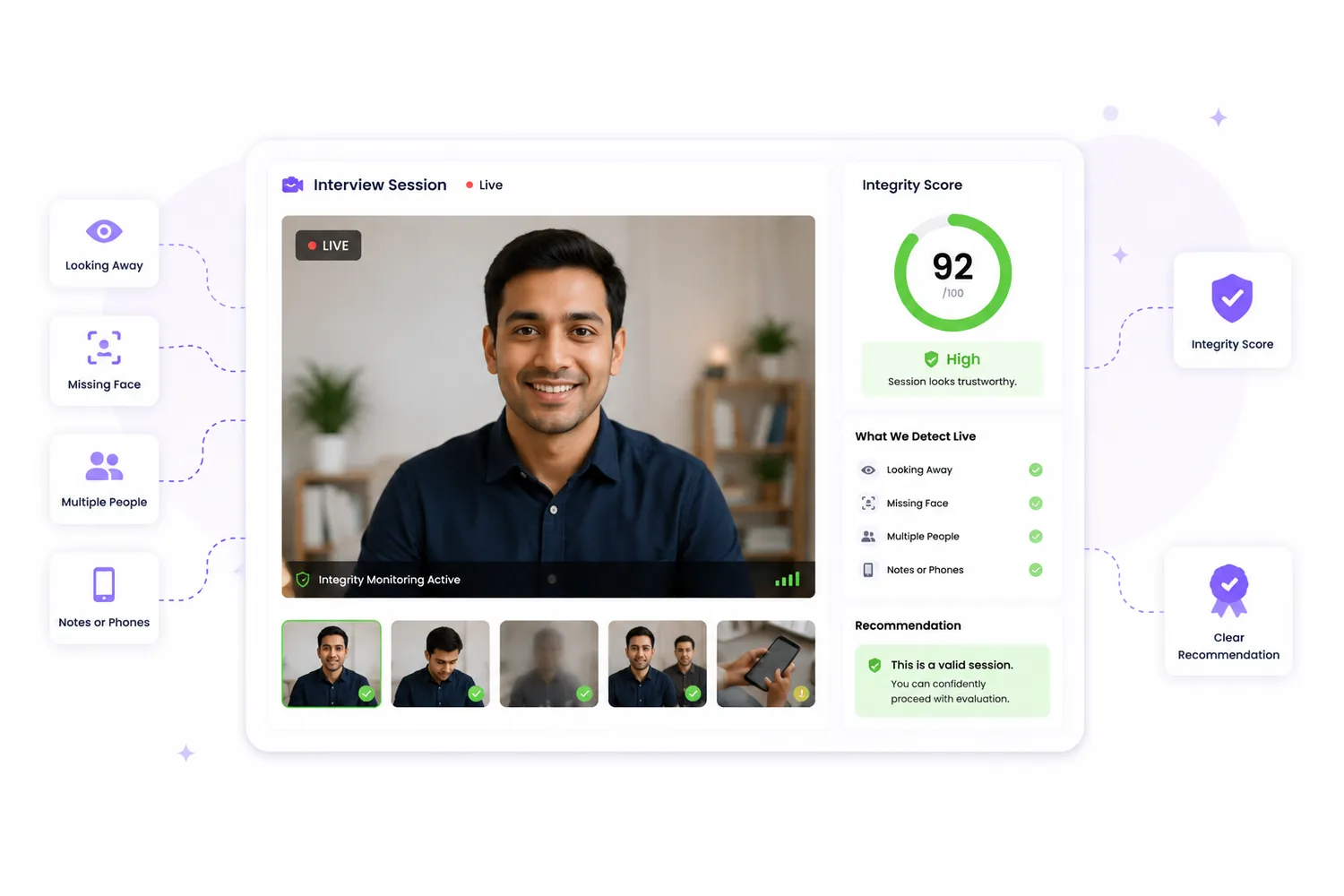
03Integrity built into the session
Frames are analysed live for looking away, a missing face, multiple people, or notes and phones in shot. Those signals roll up into an integrity score with a clear recommendation, with explicit recording consent captured up front — so a high score is one a hiring manager can actually defend.
 04
04A credit-metered SaaS, ready to sell
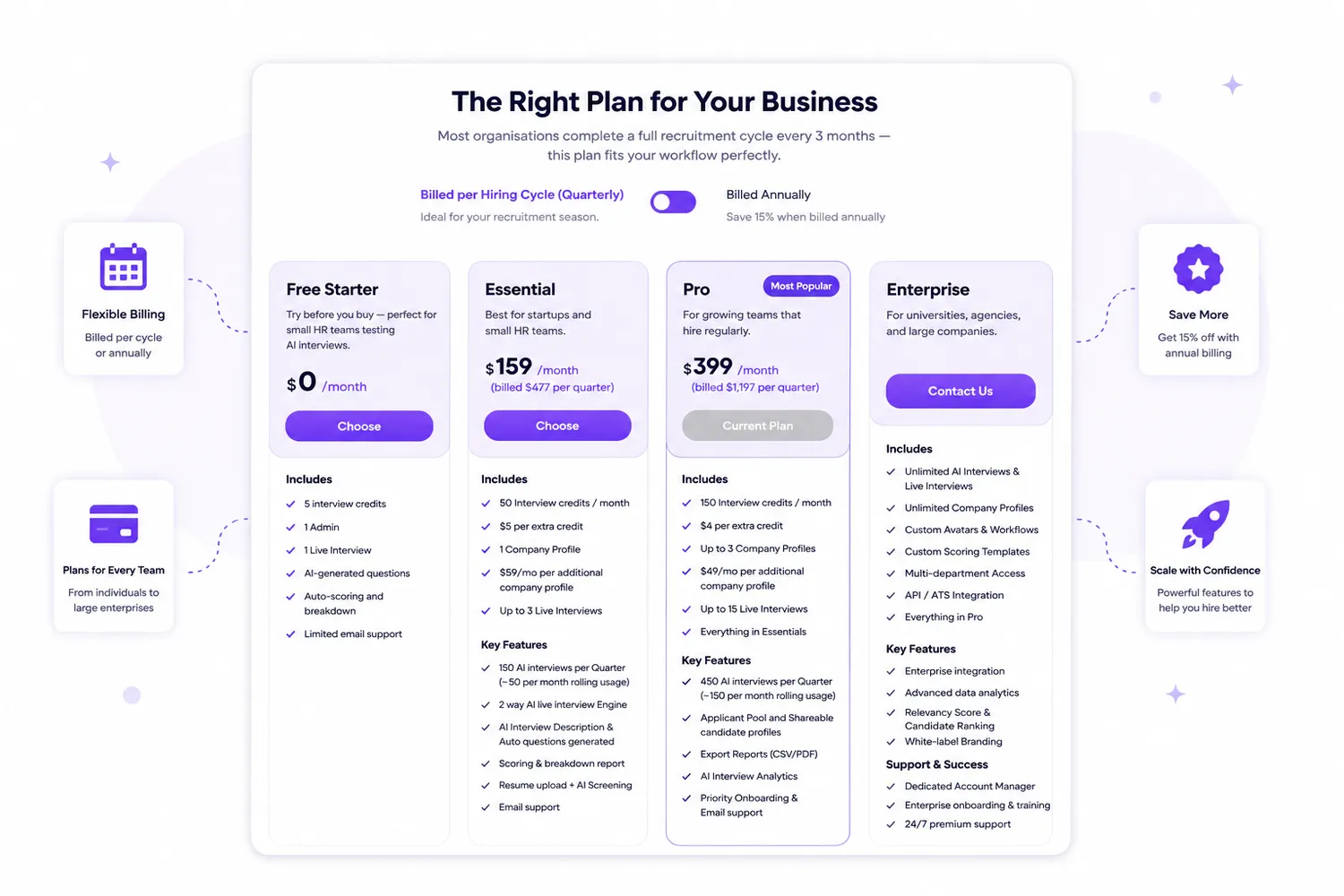
On top of the interview engine we shipped the whole product: resume parsing and CV-vs-JD scoring, three-language support (English, Simplified & Traditional Chinese), push and email notifications, and subscription billing. A reserve-then-settle credit model charges one credit per real interview and auto-refunds anything under 60 seconds, so billing always matches usage.
Stack we shipped
The result
What changed.
Screening stopped being a queue. The moment someone applies they can sit a full first-round interview with the avatar, so time-to-first-screen collapsed from about five days to eight minutes — and the team's first-round capacity went from ~30 candidates a week to effectively unlimited, running around the clock and in parallel.
Recruiter time per 100 applicants dropped roughly 95%, from a 40-hour slog to a couple of hours spent reviewing ranked, rubric-scored shortlists instead of running interviews. Because every candidate now faces the identical rubric — with an integrity score attached — hiring managers finally compare like-for-like, and the recruiters spend their week on the people who actually clear the bar.
Demo video
See it in action.
A full AI avatar interview, start to finish — real-time voice, live transcript, and rubric-based scoring.
Have a project like this?
Tell us what you want to build. We'll tell you how fast we can ship it — and walk you through this build live.